|
|
 |
| |


Customized Course Outline | Course Schedule

Customized Course Outline
Course Objectives | Requirements | Approach
| Who Should Attend | Curriculum | Cost
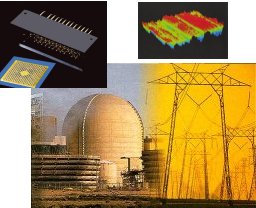 Timron Advanced Connector Technologies (TACT) offers a range of courses that provide a practical
treatment of electrical connectors and switches to meet the needs of connector/switch manufacturers and end-users. These needs
range from identifying a rational basis for specific features of connectors and switches, to determining the performance
attributes and limitations of selected types of connectors and switches. The training offered by TACT may be tailored to meet
the specific needs of participants in critical areas such as design, connector/switch specifications and mitigation
of connector/switch failure.
Timron Advanced Connector Technologies (TACT) offers a range of courses that provide a practical
treatment of electrical connectors and switches to meet the needs of connector/switch manufacturers and end-users. These needs
range from identifying a rational basis for specific features of connectors and switches, to determining the performance
attributes and limitations of selected types of connectors and switches. The training offered by TACT may be tailored to meet
the specific needs of participants in critical areas such as design, connector/switch specifications and mitigation
of connector/switch failure.
Course Objectives
TACT courses are conducted over a one-, two-, or three-day time interval, depending on customer's requirements. Training
is conducted at the customer's premises or at a site selected by the customer.
The general objectives of Courses are outlined below:
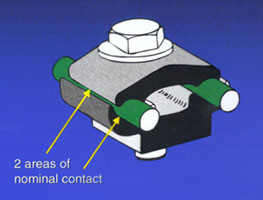
1. Generate a fundamental understanding of the consequences of passing an electrical current through an electrical interface or an arcing contact.
Depending on the customer's specific requirements, the course may be customized to address to contact properties of
signal frequencies ranging from DC to the gigahertz region i.e. contact resistance, effects of surface finish and surface
contaminant layers on resistance, temperature rise, interface embrittlement, etc. The course may also be customized to focus on relevant properties of arcs in circuit-interruption switches. Regardless of areas of focus, the course emphasizes hands-on applications with minimal
reliance on mathematical formulations,
 2. Provide extensive engineering data on the mechanical properties of materials used in electrical contacts, such
as copper and aluminum alloys, with emphasis on copper alloys. Similar engineering data are also provided for materials used in arcing contacts, with emphasis on silver-base alloys. Effects of such material-processing parameters as heat
treatment, metalworking etc are covered. The relevance of these data on the design and performance of connectors/switches are addressed,
2. Provide extensive engineering data on the mechanical properties of materials used in electrical contacts, such
as copper and aluminum alloys, with emphasis on copper alloys. Similar engineering data are also provided for materials used in arcing contacts, with emphasis on silver-base alloys. Effects of such material-processing parameters as heat
treatment, metalworking etc are covered. The relevance of these data on the design and performance of connectors/switches are addressed,
3. Review basic principles of surface chemistry and relate these principles to the "workings" and choice of lubricants
in separable electrical connectors. The consequences of dry sliding and mechanical wear on the contact properties of
separable connectors are addressed,
4. Provide extensive data on surface finish and the properties of coatings and electroplates used in the connector
industry. The correlation of these data with connector performance is emphasized,
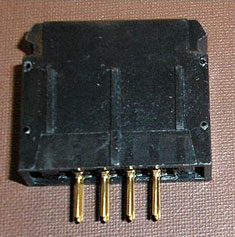 5. Generate a fundamental understanding of corrosion problems in electrical connectors. The inability of selected
electroplates to protect against corrosion is addressed. The effects of corrosion on connector performance are also
covered in detail. Techniques that are widely used for reliability-testing in the connector industry are described in detail,
5. Generate a fundamental understanding of corrosion problems in electrical connectors. The inability of selected
electroplates to protect against corrosion is addressed. The effects of corrosion on connector performance are also
covered in detail. Techniques that are widely used for reliability-testing in the connector industry are described in detail,
6. Provide extensive guidelines for the design and development of reliable electrical connectors or switches. These guidelines
are based both on a large body of non-proprietary data published in the open literature and on experience acquired by
the instructor over many years.
Note: A customized Course may be tailored to focus on high-voltage / high-current connectors such as those used in
transportation, consumer products, and communications. A course may similarly be customized to address electrical switches.
Requirements
Courses require an elementary knowledge of mechanical (rudiments of elasticity, friction laws etc) and
electrical engineering (fundamentals of electrical current flow and electrical circuits etc). Participants with a
background in other disciplines but with some practical experience with electrical and mechanical devices will have
no difficulty in following material presented at a Course.
Approach
Courses are presented through easy-to-follow color overhead slides. Each participant is given a set of black-and-white
copies of the slides collected in a binder.
Who Should Attend
- Engineers and technicians involved in research, design, development and testing of connectors for the computer,
electronics, communication, automotive, electrical power and electrical utility industries.
- Participants involved in other areas, such as connector failure analysis, technical sales and engineering
management in the connector industry, will also benefit.
Curriculum
Cost
All inquiries on specific training requirements and associated cost must be made by phone, fax, or email.
All One Day Courses include the following items:
- A set of course notes for each participant, each set comprising about 200
pages of course material and copies of important published references from the
electrical contact literature, in a labeled binder,
- Free telephone consultation on any segment of the Course for three (3)
months following completion of the course, by all participants.
The Three Day Course includes the following items:
- One set of course notes for each participant, each set comprising about 600
pages, in a labeled ring binder,
- Free telephone consultation on any segment of the Course for three (3)
months following completion of the course, by all participants.
|
 |
|
 |
|
 |
|